
Tamping Technology

High capacity I Precision I Reliability
At the heart of track maintenance
Tamping as a key process for track safety, availability, and quality.
Contents
Nine chapters, from the physics of ballast compaction to autonomous and electric machines. Select a chapter to open it.
- 01 Tamping technology The basis of modern track maintenance
- 02 The cost-effective machine Quality, performance and choice of machinery
- 03 Milestones in tamping technology Seven decades of innovation since 1953
- 04 The machine as a surveyor From measurement value to system knowledge
- 05 The autonomous machine Automation and assistance systems
- 06 The sustainable machine Electric tamping, retrofits and life cycle
- 07 Functional add-ons and additional equipment Equipment for specific tasks
- 08 Customer services and the lifecycle Support over the machine’s life
- 09 FAQs Tamping technology in a nutshell

Introduction
Why does the track need to be tamped?
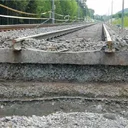
During train travel, high vertical and horizontal forces act on the track. As the stress on the system increases, plastic deformations remain. They are reflected in track geometry defects.
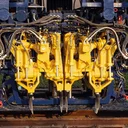
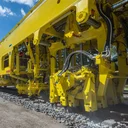
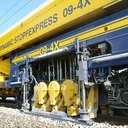
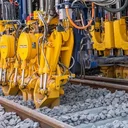
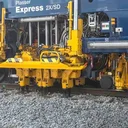
If the quality level falls below a defined threshold, operational measures must be taken, including low-speed sections or line closures. The purpose of tamping is to restore the track geometry: the machine measures any deviations, lifts and lines the track panel, and systematically compacts the ballast beneath the sleepers.
Today, track tamping is the only technically and economically efficient procedure to improve the aging ballast bed.
More technology brochures
Track renewal Maintenance Ballast cleaning Measuring vehicles Catenary construction Dynamic track stabilization MFS APT 1500 R